
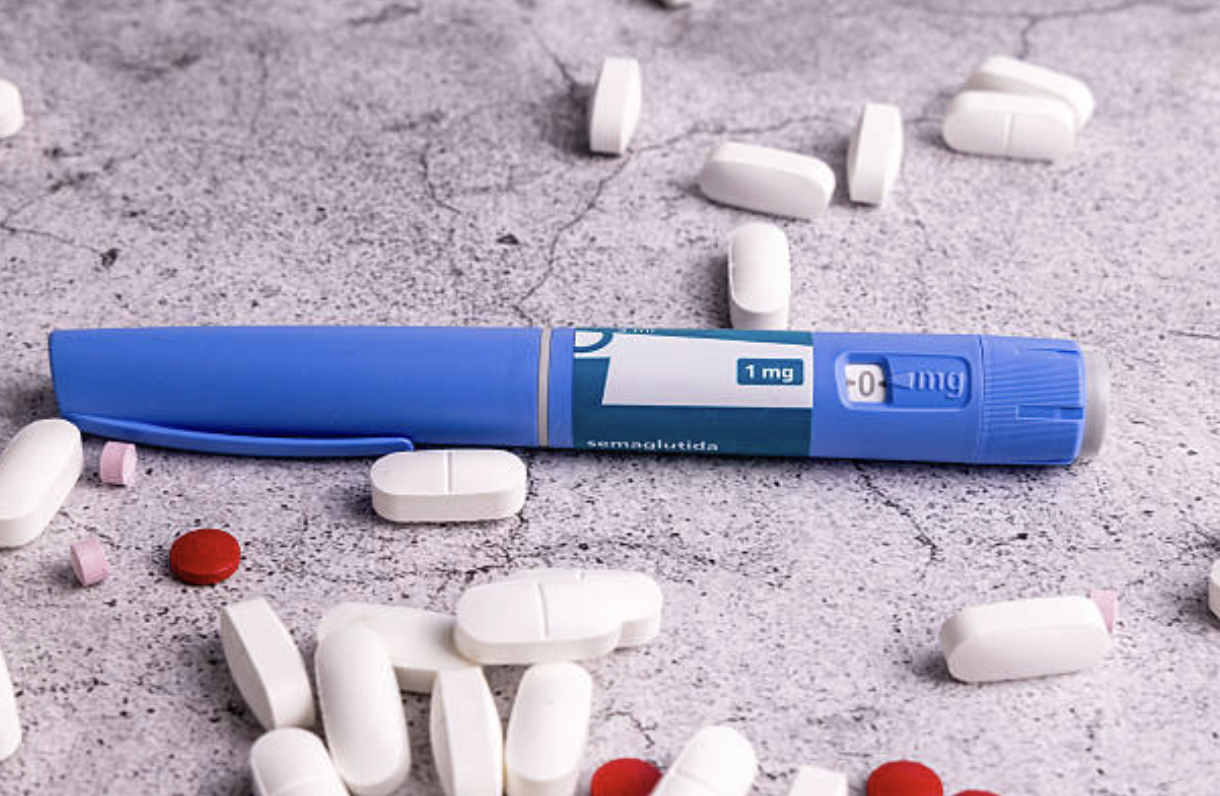
Let's be honest about why you're asking this question. The needle. The weekly ritual of pulling out the pen, pinching skin, and bracing for the sting. Or maybe it's the cost, because $1,200 a month is not a small number no matter how you justify it. Or it's just the sheer inconvenience of being a person who has to keep injectable medication refrigerated, explain it at airport security, and time their meals around injection days. All of those reasons are real. None of them are frivolous. And the question of whether an oral GLP-1 pill can do what your injection is doing deserves a straight answer, not a lot of hedging.
So here it is. For some patients, yes. A pill can be the right call. For others, no, it can't. The difference matters, and figuring out which category you're in isn't that complicated once you understand what you're actually trading.
What We're Comparing
The injectable GLP-1s that most people know are semaglutide (Wegovy and Ozempic) and tirzepatide (Zepbound and Mounjaro). These medications work by mimicking hormones that regulate blood sugar, appetite, and digestion. They slow gastric emptying, reduce hunger signals, and over time most people find they're genuinely less interested in food. Not fighting cravings. Actually less interested. That distinction matters for long-term compliance.
The oral options are a different story pharmacologically. Rybelsus has been around since 2019, approved for type 2 diabetes. It's oral semaglutide at doses up to 14mg. It works, but let's be clear. It was designed for glycemic control, not for the kind of weight loss most people are chasing. Foundayo is the newer entry, oral semaglutide at 25mg and 50mg, specifically approved for chronic weight management in adults with obesity or overweight with a weight-related condition. It became available in late 2024. This is the one that actually competes in the weight loss conversation.
The bioavailability difference is significant and worth understanding. Subcutaneous semaglutide, meaning injected under the skin, achieves about 89% bioavailability. Oral semaglutide has to survive the gastrointestinal tract, which is famously hostile to peptide molecules. That's why the pill requires a special absorption enhancer called SNAC (sodium N-[8-(2-hydroxybenzoyl) amino caprylate]) and must be taken on an empty stomach with no more than four ounces of water, followed by at least thirty minutes before eating anything. The bioavailability of oral semaglutide ends up around 1%. But here's the thing. That doesn't mean the drug doesn't work. It means you need to take a lot more of it. And when you do, you get plasma levels that are therapeutically meaningful.
The Weight Loss Numbers
I'm going to give you the trial data because you deserve to make this decision with actual numbers. The OASIS-1 trial looked at oral semaglutide 50mg for adults with obesity but without diabetes. Sixty-eight weeks in, participants lost an average of 15.1% of their body weight. The placebo group lost 2.4%. That's not nothing. That's a real number.
Compare that to the STEP trials with injectable semaglutide at 2.4mg weekly. Sixty-eight weeks, average weight loss around 14.9% of body weight. And here's where it gets interesting. In direct comparison, oral semaglutide 50mg and injectable semaglutide 2.4mg showed similar weight loss outcomes in the OASIS program. Similar. Not inferior. The SEQUENCE trial, which directly compared the two formulations in patients with type 2 diabetes, showed that injectable semaglutide produced greater HbA1c reductions, but the weight loss comparison in obesity-focused trials was closer than most people expect.
So here is the headline. The pill isn't automatically weaker for weight loss. At the right dose, it can match the injectable on weight reduction. The question becomes whether you can tolerate it and whether you'll actually take it correctly.
The Cost Argument
Foundayo lists at roughly $500 to $600 per month in the United States without insurance coverage. Wegovy lists at over $1,300 per month. That's a real difference. And for the large number of patients who don't have insurance coverage for GLP-1 medications, that gap in out-of-pocket cost is the entire decision.
But I want to be careful here, because the math has layers. First, insurance coverage varies wildly. Some plans that don't cover Wegovy do cover oral semaglutide, or vice versa. Some plans cover neither. Some cover both with different copays. You need to know your specific situation before you assume the pill is cheaper for you personally.
Second, manufacturer savings programs exist and change frequently. Novo Nordisk has offered programs that bring the injectable cost down significantly for people who qualify. Same with Eli Lilly for tirzepatide products. The oral medications also have savings programs. This isn't a stable landscape. What's true about cost today may not be true in six months.
Third, and this one I want to be direct about. If you're getting meaningful weight loss and health benefits from your injection and the cost is genuinely prohibitive, switching to the pill is rational. Staying on a medication that's pricing you out makes no sense. Partial coverage at a lower cost beats no coverage at a higher cost. I've seen patients who were doing beautifully on Wegovy have to stop entirely because the cost became untenable, and that outcome is worse than transitioning to an oral option that costs less.
The Needle Argument
Let me say something that doesn't get said enough in clinical settings. Needle aversion is a legitimate medical consideration, not a weakness or a preference to be dismissed. There are patients who will not sustain weekly self-injection long term. Not because they're non-compliant in some moral sense, but because the psychological and physiological stress of that routine is genuinely unsustainable for them.
And here's the compliance reality. A medication you take every day is, statistically, a medication you're more likely to forget or skip than one you take weekly. That's a strike against the pill. But a medication you actively dread taking, even once a week, has its own compliance problems. The needle phobia crowd doesn't always admit how much they're dreading injection day, how often they delay it, how much mental energy goes into talking themselves into it. If that's you, honestly, the pill may actually win on real-world compliance even though it theoretically has a shorter dosing window to miss.
The 30-minute fasting requirement for oral semaglutide is worth taking seriously though. You take the pill first thing in the morning, before coffee, before breakfast, before anything. Then you wait thirty minutes. For some people that's effortless. Wake up, take pill, start the day. For others, especially people with early schedules or children to get out the door or jobs that start at 6am, that thirty-minute window is genuinely disruptive. Not impossible. But not nothing.
What the Transition Actually Feels Like
This is where I think patients get surprised, and I want to be specific about it.
When you switch from an injectable GLP-1 to an oral one, you're not just changing delivery method. You're changing the pharmacokinetic profile. Injected semaglutide has a half-life of about a week, which is why weekly dosing works. You get relatively stable plasma levels throughout the week. Oral semaglutide has a different absorption pattern, with peak levels occurring one to two hours after dosing and then declining. The day-to-day variation in how you feel can be more noticeable.
A lot of patients report that the first few weeks after switching feel like starting over. Appetite may come back more than expected. The food noise, which is how patients describe the background hum of constant food thoughts that GLP-1s quiet down, may return partially or fully during the transition. This isn't a sign the pill doesn't work. It's a sign you're adjusting to a different pharmacological pattern. But it's uncomfortable, and patients need to be prepared for it.
The nausea profile is also different. Injectable semaglutide nausea tends to be most pronounced at dose escalation, and many patients find it manageable or even minimal. Oral semaglutide can produce gastrointestinal side effects that are more variable because absorption varies based on what you ate the night before, how much water you drank, stomach acid levels. The same pill taken the same way on two different days may produce different results in terms of nausea or stomach discomfort. That variability is a real thing and I don't want to minimize it.
Most patients who are going to adapt to the oral medication do so within four to eight weeks. By week eight, if the pill is working for you, you should have found your rhythm with the fasting requirement and the side effects should be less frequent. If you're still nauseated every day at week eight, that's worth a conversation with your prescriber.
How to Tell If the Switch Is Working
Weight is the obvious metric but it's not the only one and it's not even the fastest one. Give yourself at least eight weeks before drawing conclusions. In the first month or two, you may not see dramatic weight changes but you should see something. A little less hunger, a little less interest in snacking, some reduction in that constant background awareness of food.
By three months, if oral semaglutide at the right dose is working for you, you should be seeing weight loss. Not necessarily as fast as you saw with the injection, but meaningful. If you're three months in and your weight hasn't moved and you're taking the medication correctly, that matters. Some people are simply better absorbers of the oral formulation than others, and the variability in oral bioavailability means that patient response varies more widely than with injected versions.
Blood glucose control, if that's a concern for you, may be a more sensitive early indicator. People with type 2 diabetes who switch might notice their fasting glucose numbers diverging from where they were before they can see it on the scale.
And frankly, how you feel matters. The food quiet. The reduction in cravings. The sense of satiety after smaller portions. Those qualitative signals are telling you something real about whether the medication is doing its job in your body. Don't dismiss them because they're not quantitative.
Who Should Not Make This Switch
There are patients for whom the injectable simply makes more clinical sense, and I want to be honest about that.
If you've lost a significant amount of weight on an injectable GLP-1 and you're in active weight loss phase, this is not the moment to experiment with switching. You've found something that works. Disrupting it introduces a period of pharmacological instability right when you want consistency.
If you have severe diabetes with significant HbA1c elevation, injectable semaglutide or tirzepatide offers more reliable glycemic control and dose predictability. The oral option is FDA-approved for weight management but the clinical evidence for glycemic control is stronger for the injectable forms at the doses used for obesity treatment.
If you've tried Rybelsus before and couldn't tolerate the gastrointestinal side effects, Foundayo is the same molecule just at a higher dose. Don't assume you'll tolerate it better because it's a different product. The dose is higher, and GI side effects generally track with dose. If you struggled at 14mg, 25mg or 50mg is a real question mark.
And if your weight-related health conditions are severe, obstructive sleep apnea, nonalcoholic steatohepatitis, cardiovascular disease, the marginal difference in efficacy between formulations matters more. This isn't the moment to optimize for cost or convenience at the expense of maximum efficacy.
Who the Switch Actually Makes Sense For
So who is the right patient for this? Someone who has successfully lost weight on an injectable and is now in a maintenance or near-maintenance phase where the demands on the medication are lower. Someone for whom cost is genuinely prohibitive and the alternative is stopping GLP-1 therapy entirely. Someone with significant needle phobia that has been affecting their injection compliance. Someone whose lifestyle or schedule makes cold storage of injectables genuinely difficult, frequent travel, variable living situations.
The right patient for the oral option is also someone who can reliably execute the morning fasting protocol. If your morning routine already has a non-negotiable thirty-minute window where you're not eating or drinking anything except water, this is going to be easy. If you're someone who eats within five minutes of waking up every single day, it's going to require real behavior change.
I've also seen patients for whom the daily ritual of the pill is actually better psychologically than the weekly injection. There's something grounding about taking a medication every morning, building it into a routine, having it be part of the start of the day rather than a weekly medical event you have to mentally prepare for. For those patients, the oral option provides a structure that suits them better even setting aside the needle issue entirely.
The Tirzepatide Question
I want to address this because it comes up. Tirzepatide, the dual GIP and GLP-1 receptor agonist in Zepbound and Mounjaro, doesn't currently have an oral formulation on the market. As of 2025, Eli Lilly has been developing one but it wasn't yet available for clinical use. If you're on tirzepatide and thinking about switching to an oral option, you're looking at switching molecules entirely, moving to semaglutide, which is a meaningful pharmacological change, not just a route-of-administration change. Tirzepatide's dual action is part of why it tends to produce higher weight loss averages in clinical trials than semaglutide. Switching from injectable tirzepatide to oral semaglutide to avoid the needle means giving up some efficacy that comes from the dual mechanism. That's a real trade-off and worth understanding clearly before making the decision.
A Note on How to Talk to Your Doctor About This
Bring the specific reasons you're considering switching. Not just "I want to try the pill." Be specific. The cost is $X a month and I can't sustain it. Tell them about the anxiety around injections and how you've been delaying your dose. Mention that you travel frequently and cold storage is a logistical problem. Specific reasons lead to useful conversations. Vague dissatisfaction with your current medication leads to a lot of back and forth that doesn't go anywhere.
Ask specifically about Foundayo if that's what you're interested in, because some clinicians are more familiar with Rybelsus and may not be current on the obesity-specific data for the 50mg oral formulation. Ask about your insurance coverage for both options. Ask what the plan is if the switch doesn't work. Knowing there's a path back to the injectable if needed takes the pressure off the decision considerably.
"A theoretically superior injection you stop taking is worse than a pill you take every morning for the next several years."
The Bottom Line
The pill isn't a compromise. For the right patient, it's a completely reasonable choice that can produce real, meaningful, sustained weight loss. The OASIS-1 data makes that clear. The question isn't whether oral semaglutide works. It does. The question is whether it will work for you given your biology, your schedule, your finances, and your history.
Don't let anyone dismiss the reasons you're considering this switch. Cost matters. Needles matter. Convenience matters. These are not shallow concerns. They're directly connected to whether you actually take the medication long enough to get the benefit from it. A theoretically superior injection you stop taking is worse than a pill you take every morning for the next several years.
Be honest with yourself about the morning fasting requirement, because that's where most people underestimate the friction. And be patient with the transition, because the first eight weeks are not representative of how the medication will feel at month three or month six.
And finally, check back in. This isn't a set-it-and-forget-it decision. Three months after switching, you should know whether it's working. If it's not, that's not failure. That's information.