
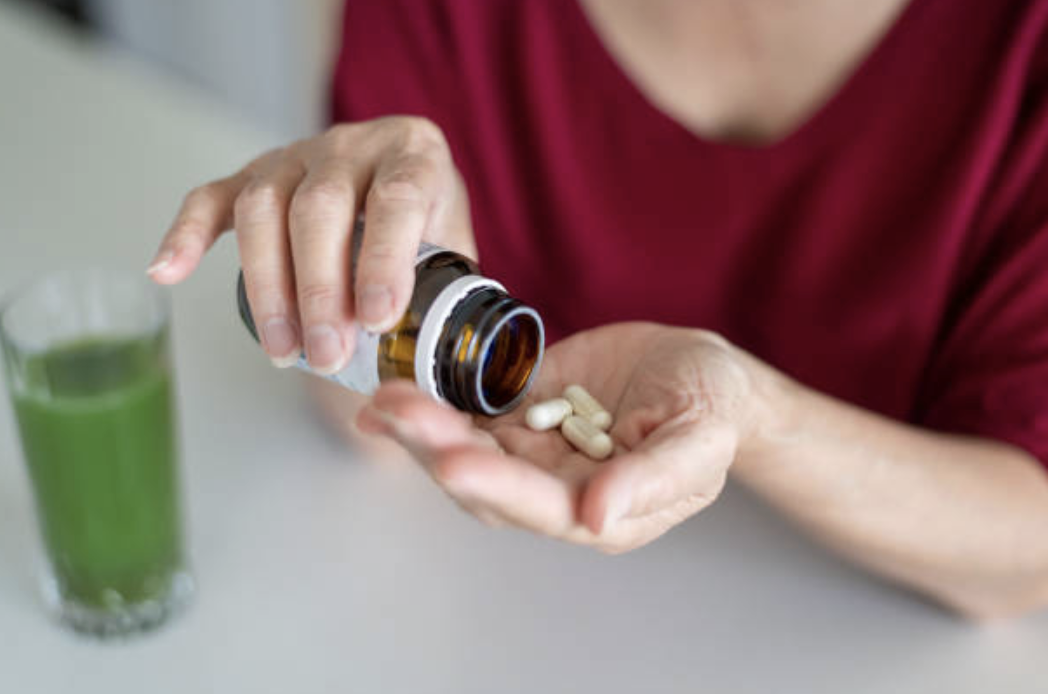
People ask me this comparison more often than I expected. GLP-1 pills and fat burners are not two versions of the same thing, and putting them in a direct comparison is a bit like comparing a blood pressure medication to a cold-pressed juice. One is a pharmaceutical drug with clinical trial data behind it. The other is not. That does not make supplements worthless, but the gap is large enough to matter.
How GLP-1 Pills Work
GLP-1 stands for glucagon-like peptide-1, a hormone your intestines release after eating. It binds to receptors in the pancreas to stimulate insulin secretion and in the stomach to slow gastric emptying. In the brain, specifically the hypothalamus, to suppress appetite. GLP-1 receptor agonists like orforglipron (Foundayo) and oral semaglutide (Oral Wegovy) mimic this hormone by binding to the same receptors.
The appetite suppression isn't incidental. It's the primary mechanism. These drugs change the hormonal signals that tell your brain you're hungry, and they do it continuously as long as you're taking them. The ATTAIN-1 trial for orforglipron showed an average of 12.4% weight loss over 36 weeks, those results come from sustained changes in appetite biology, not from any effect on thermogenesis or fat oxidation. Oral semaglutide trials show around 15% average weight loss through the same core pathway.
How Fat Burners Work, and What They Don't Do
"Fat burner" is a marketing category, not a medical one. Most supplements contain some combination of caffeine, green tea extract (EGCG), synephrine, L-carnitine, and capsaicin, often with a proprietary blend label that obscures the actual doses of each ingredient.
Some have real mechanisms, just weak ones. Caffeine with EGCG produced about 1.3 kg more weight loss than placebo over 12 weeks in a 2011 Obesity Reviews meta-analysis. That is a fraction of what GLP-1 medications produce. None of these ingredients are FDA-approved for weight loss. They are dietary supplements, and the regulatory bar is lower than a clinical drug file requires.
The Evidence Gap
GLP-1 medications go through Phase 2 and 3 trials before approval. The Wegovy file involved thousands of patients over more than a year of dosing. Supplements require no such evidence. They require that they not be acutely dangerous and that label claims are not explicitly false. Some products in the category have modest evidence, many have none, and a consumer usually cannot tell the difference from the label.
When a patient asks whether a fat burner is worth trying, the realistic answer is that the ceiling for these ingredients is a fraction of what GLP-1 medications produce. If cost is the concern, that is a conversation worth having about manufacturer savings programs, not supplement shelves.
Ingredient by Ingredient, What the Data Says
Not all fat burner ingredients sit on the same evidence footing, and treating the category as a single thing does it a disservice. A few ingredients have enough data to discuss seriously. Most do not.
Caffeine has the best evidence, which is part of why it anchors almost every formulation. At 200 to 400 mg per day it produces a small and measurable increase in resting energy expenditure, roughly 3 to 5 percent in most studies, and it is mildly appetite-suppressing in many users for the first few weeks before tolerance sets in. That effect is real but modest. A patient who already drinks two cups of coffee is getting most of the dose that matters.
Green tea extract, specifically the EGCG catechin, shows a small additive effect when combined with caffeine. The 2011 Obesity Reviews meta-analysis I mentioned earlier is probably the cleanest data on this, and the effect size translates to about 1 to 2 pounds more loss over three months compared to placebo, when diet and exercise are held constant. For context, that is one week of progress on a GLP-1 drug, not a month of it.
L-carnitine gets marketed as a fat-burning amplifier because of its role in shuttling fatty acids into mitochondria for oxidation. In supplement form at doses most people take, it does very little in individuals who are not carnitine deficient. The few studies that showed a signal used doses in the 2 to 4 gram range over months, and most consumer products dose well below that threshold.
Capsaicin and related compounds show a brief thermogenic bump after ingestion that fades within hours. Synephrine, which replaced ephedra in many formulations after the 2004 ban, has modest thermogenic activity and real cardiovascular concerns at higher doses. I do not recommend synephrine products to patients with any cardiac history, and I am cautious about it even in healthy adults because the dose-response curve has been poorly characterized in post-market surveillance.
The other ingredients, raspberry ketones, garcinia cambogia, CLA in most tested forms, have either failed to produce weight loss in controlled trials or have evidence so thin that I would not factor them into a recommendation.
What I Walk Patients Through When They Ask
My clinical approach on this is direct. If a patient is asking whether they should take a fat burner instead of starting a GLP-1, I tell them the evidence gap is wide enough that the comparison is not close. If they are asking whether they can take one alongside a GLP-1 medication, the answer depends on the specific product. Caffeine at a reasonable dose is fine for most patients. Formulas heavy on stimulants can amplify the GI side effects of a GLP-1 in the first weeks of titration and I usually ask patients to hold off until dosing is stable.
There are patients for whom supplements make sense. Someone who is not yet ready for a prescription, or has a contraindication, or wants to pair a caffeine-based product with a meaningful dietary intervention can get a real but small outcome. What I try to prevent is the assumption that supplements and GLP-1s are interchangeable options that come down to personal preference. They are not. One is a drug class with tens of thousands of patients of Phase 3 data, the other is a loosely regulated consumer category with variable quality and variable dosing.
The pricing argument occasionally comes up, and it is a fair one to raise. GLP-1 medications are expensive, and insurance coverage for obesity treatment is uneven. But the gap between supplement prices and GLP-1 prices has narrowed considerably. Monthly cash prices for oral GLP-1s through manufacturer direct programs are now in the $149 to $249 range in many cases. That is not cheap, but it is inside the range that a serious monthly supplement habit already costs, and the evidence behind it is many orders of magnitude stronger.
So Why Does This Comparison Even Come Up?
From the outside, both look like "pills for weight loss," which is where the confusion starts. What is harder to excuse is the use of "natural GLP-1 booster" marketing on products that have no mechanism connecting them to GLP-1 receptor biology. That phrase has no regulatory definition and no trial data behind it.
GLP-1 pills produce 12 to 15 percent average weight loss through a well-characterized receptor mechanism with FDA approval. Fat burner supplements produce, at best, 1 to 3 percent from thermogenic ingredients with highly variable evidence. Those are not two points on the same spectrum. Anyone asking the question deserves to know that before they make a decision.