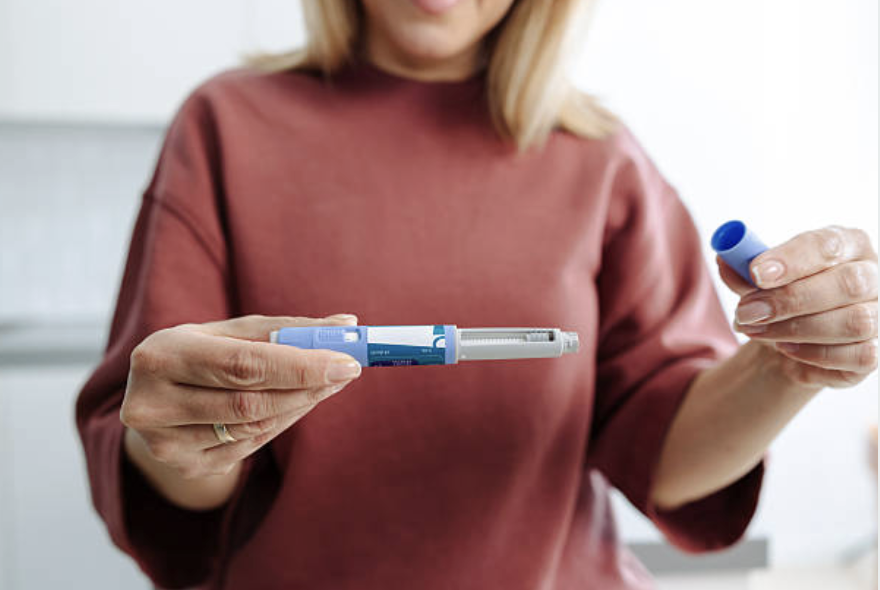

Four years. That is the longest anyone has watched one of these drugs under trial conditions, and it comes from SELECT, published in the New England Journal of Medicine in 2023. Seventeen thousand adults, all of them carrying extra weight and existing heart disease, none with diabetes, put on semaglutide 2.4 mg or a placebo and followed out to 208 weeks. The headline was cardiac: major adverse cardiovascular events fell by 20 percent. Weight came down about 10 percent more than placebo and stayed there.
Then there is the line almost nobody quotes. Serious adverse events were lower in the semaglutide group than in the placebo group.
Most people arrive at this question expecting the opposite, so it is worth sitting with what a serious adverse event actually is in a population like that one. Heart attacks. Strokes. Hospitalizations that obesity and vascular disease generate on their own. Remove ten percent of body weight and you remove some of that. The drug group did stop treatment more often for gastrointestinal side effects, so there was a genuine cost, just not the kind people brace for.
That result also belongs to the particular group of people SELECT enrolled, and it does not travel everywhere. Every participant already had cardiovascular disease, none had diabetes, and the trial was built to catch cardiac events in a population primed to have them. A high baseline event rate is exactly the setting where a drug that lowers cardiac risk can finish ahead on total serious harm, because it has real events available to prevent. Run the same four years in a 34 year old with a BMI of 31 and no vascular disease and the arithmetic changes. The cardiovascular benefit has far less to work with, while the gallbladder and lean tissue risks apply in full. That finding is a true statement about SELECT, not a safety certificate for everyone who wants to lose thirty pounds.
What SELECT cannot tell you is whether any of this transfers cleanly to a pill. Almost all of the durable safety experience in this class sits with injections. Exenatide has been used in type 2 diabetes since 2005, liraglutide since 2010, and semaglutide was approved for diabetes in 2017 and for weight in 2021. So roughly two decades of class exposure, about nine years of semaglutide specifically, and much less than that behind the weight loss pills people are asking about now.
The suspicion underneath the question is earned. Fen-phen was pulled in 1997 after reports of heart valve damage. Sibutramine came off the market in 2010 when a cardiovascular outcomes trial found excess events. Lorcaserin lasted until 2020, when a cancer signal took it off the market. Three drugs in twenty-three years, every one of them considered acceptable until it wasn't. So rather than hand you a verdict, I want to go through the actual risks one at a time. One distinction runs through all of them. Some are real and manageable, meaning we watch for them, catch them early, and keep treating. One or two end treatment outright. Patients tend to reverse those categories, worrying hardest about the ones we manage and shrugging at the ones that stop the drug.
The gallbladder, and the part I see on an operating table
Trials put gallstones at roughly 1.6 to 2.5 percent of people on semaglutide against about 0.6 to 1.1 percent on placebo. A real increase, and still a small absolute number.
Two mechanisms drive it and they are hard to pull apart. The first is the drug itself. GLP-1 signaling slows gallbladder contraction the same way it slows the stomach, so bile sits in the gallbladder longer and concentrates instead of being flushed out on a regular cycle.
The second has nothing to do with the drug and everything to do with losing weight quickly. As fat stores break down, the cholesterol stored inside them is mobilized, and much of it leaves the body through bile. Bile carrying more cholesterol than it can hold in solution supersaturates and crystallizes. At the same time, eating less means less fat arriving in the small intestine and less cholecystokinin released, so the gallbladder contracts less often to clear the sludge that is forming. That is why patients form stones after a sleeve gastrectomy, or on a very low calorie diet, with no medication anywhere near them, and it is why I read part of that trial number as a tax on rapid weight loss rather than a property of the drug.
That is also the part you can influence, since slower titration and a less aggressive deficit lower stone formation.
Pain in the right upper abdomen that arrives after a fatty meal and radiates into the back or the right shoulder deserves an ultrasound, not a few weeks of watching. Symptomatic stones do not go quiet on their own, and what follows is worse than the original pain, whether that is an inflamed gallbladder or a stone in the bile duct. I take gallbladders out for a living, and the ones that arrive as emergencies almost always had weeks of warning that somebody waved off.
This is the cleanest example of a risk that is real without ending treatment. A gallbladder can come out, and patients go back on the drug afterward.
Slowed stomach emptying is the mechanism, not the side effect
People get this backwards constantly. Delayed gastric emptying is part of how the drug works, not an unfortunate byproduct of it. Food stays in the stomach longer and stretch receptors keep firing, so fullness arrives on a smaller volume.
The FDA added a gastroparesis warning to labeling in 2023 and an ileus warning in 2024. Both are rare, and both sit at the pathological end of a spectrum whose mild end is the intended effect.
In practice the line sits somewhere specific. Nausea and early fullness during titration are expected and usually settle within a few weeks at a given dose. Vomiting food you ate hours earlier, or dehydration you cannot drink your way out of, is a different animal, and it means dropping the dose or stopping. A complete halt in bowel function with distension and vomiting is a surgical emergency, not something to raise at your next appointment.
Timing tells you most of what you need to know here. Gastrointestinal intolerance is front-loaded. It clusters in the titration weeks and at each dose increase, and for most people it fades as the gut adapts, which is why year four on a stable dose tends to look nothing like month two. That also explains why the higher discontinuation rate in SELECT is not a paradox sitting next to the lower rate of serious harm. People leave early over gastrointestinal effects, and those still enrolled at 208 weeks are the ones whose stomachs made peace with the drug. Genuine gastroparesis does not follow that curve. When it turns up it tends to persist, and it sits in the category that ends treatment rather than the category we manage around.
There is also a version of this that has nothing to do with how you feel. Patients on GLP-1s can still have food in the stomach after a standard preoperative fast, which raises aspiration risk under anesthesia. Anesthesia teams ask about these drugs now, rightly. Tell any surgeon or anesthesiologist you are on one even if your stomach has been fine. I have had cases held in the preoperative area over exactly this. The shorter term picture is covered in our guide to weight loss medication side effects.
"Some risks are real and manageable. One or two end treatment outright. Patients tend to reverse those categories."
The thyroid warning has aged better than expected
Every GLP-1 carries a boxed warning about thyroid C-cell tumors, and it traces back to rodents. Rats and mice given these drugs developed C-cell tumors. That finding is why the label reads the way it does, and why the drugs are contraindicated in anyone with a personal or family history of medullary thyroid carcinoma or MEN2 syndrome. I treat that contraindication as absolute, and it sits at the top of the list of who should not take these medications at all.
For everyone else, the picture has improved, and the reasons are mechanistic rather than hopeful. Rodent C cells carry GLP-1 receptors at a density human C cells do not, so the growth signal reaching them is far weaker in a human thyroid. C cells also make up a much larger share of the rodent gland than the human one, and those animals were dosed continuously across most of a lifespan at multiples of a human exposure. A finding can be perfectly reproducible in rats and still be a species artifact. Human population studies have not shown a clear increase in the common thyroid cancers. The concern has been substantially de-risked over the past several years without ever reaching zero, and that is the honest way to put it.
What I do care about is the family history, because patients almost never volunteer the useful part. Ask instead whether any relative had thyroid cancer surgery young, and whether anyone in the family has had a pheochromocytoma, since that one travels with MEN2.
We do not screen with routine calcitonin levels, and that is deliberate. In a population at low baseline risk the test generates more false alarms than answers, and a mildly raised calcitonin pushes people toward biopsies and operations they never needed.
The eyes, where I genuinely cannot give you a number
NAION is a sudden injury to the optic nerve, usually painless vision loss in one eye noticed on waking. It has been added to semaglutide labeling in Europe and is still being monitored. It is rare. I cannot give you a reliable rate, and I cannot tell you whether the drug causes it or whether it concentrates in people who already carry the vascular risk factors for it. Sudden vision loss in one eye is an emergency whatever medication you happen to be taking. That is the full extent of my advice here.
Pancreatitis, and why the data stays messy
Pancreatitis sits on the label and the observational studies disagree with each other. Part of the reason is that the population taking these drugs already runs a raised risk, since obesity and type 2 diabetes push pancreatitis rates up on their own. And gallstones are the most common cause of acute pancreatitis in the first place, so a drug that modestly increases stone formation has an indirect route to the pancreas that has nothing to do with the pancreas itself. Separating those threads inside a claims database is difficult.
I treat it as a listed risk rather than a likely one. Severe upper abdominal pain that bores into the back and comes with vomiting means stopping the drug and getting enzymes and imaging that day, not next week. Someone with a documented prior episode I start lower and titrate slower, though I do not consider a history of pancreatitis an automatic no. Unlike a gallstone, a confirmed episode on the drug generally ends GLP-1 therapy for good, which is why I would rather over-investigate a suspicious pain than talk myself out of it.
Lean mass is what I think about over decades
A meaningful share of the weight lost on GLP-1 drugs is lean tissue rather than fat. That holds for substantial weight loss by any route, surgery included, but the size of the loss these drugs produce means the absolute amount of lean tissue in play is larger than anything the older pills ever caused.
Over a year that is a body composition footnote. Over twenty years it is the thing I would most want to protect. Skeletal muscle is where most glucose disposal happens and it sets a large share of resting energy expenditure, so losing it makes regain easier and metabolic control harder. In older patients it is also the difference between getting up off the floor and not. Someone who drops thirty percent of their body weight at 68 and loses a disproportionate amount of it from muscle has traded one problem for a slower one.
The time course here runs opposite to the gut. Nausea improves; lean tissue loss accumulates. Most of it happens during the active weight loss phase, which means the damage is being done in the year patients feel best and are least inclined to hear about it, and it does not announce itself on a scale that is finally moving the right direction.
None of that is an argument against the drug. It is an argument for doing the dull work alongside it: protein at every meal at a level most people are not close to hitting, and resistance training at least twice a week starting in the first week rather than once the scale stalls. Our piece on GLP-1 muscle loss goes through the specifics. Patients hear the protein advice and ignore the lifting, which is the wrong half to skip.
What four years can and cannot tell you
Four years is the strongest evidence this category has and it is not long. A 45 year old starting semaglutide with the intention of staying on it is asking a question about three decades, and nobody has that answer.
The risks also fail to spread evenly across those four years, which is the part most safety summaries flatten. Year one carries nearly everything that tracks the rate of weight change rather than the duration of exposure: the gallstones and the steepest part of the lean tissue loss. Year four is quieter on the surface, and what it carries instead are the questions nobody can answer yet, such as what continuous receptor stimulation does to a pancreas or a thyroid across decades. Trials are good at the first category and structurally unable to settle the second.
Bone is the clearest gap. Data on what these drugs do to bone density over years is limited. Weight loss by any mechanism reduces bone mass, and whether GLP-1s add anything beyond the weight change itself has not been settled. I would rather state that plainly than reassure you with reasoning dressed up as evidence.
The pills are a thinner file again. Oral semaglutide 25 mg, the Wegovy pill, produced about 13.6 percent weight loss at 64 weeks in OASIS 4, under empty stomach dosing rules strict enough that mistimed doses are a real problem. Foundayo, orforglipron, was approved on April 1, 2026, and averaged about 12.4 percent at its highest dose over roughly seventy weeks of trial. It carries no food or water restrictions, which is the feature patients ask about first. Real world experience with it is a few months old, and it is a structurally different kind of molecule from semaglutide, so I would not transfer semaglutide's four year record onto it. Tirzepatide, sold for weight as Zepbound, produces the largest average losses in the class, somewhere around a fifth of body weight at the top dose, and has a shorter safety record than semaglutide purely because it arrived later.
The older pills are a separate conversation and a shorter one. Phentermine is approved for short-term use, about twelve weeks, and is off the table for anyone with uncontrolled hypertension or established cardiovascular disease, so long-term safety is not really the question being asked of it. Phentermine with topiramate carries a risk of birth defects including cleft lip and palate and is dispensed under a risk management program for that reason. Naltrexone with bupropion has a boxed warning for suicidal thoughts and behaviors, along with a seizure risk. Orlistat mostly causes gastrointestinal trouble, with rare reports of serious liver injury. Supplements sold over the counter are not FDA approved at all, and the agency's own tainted products lists have repeatedly turned up hidden prescription drugs inside them, sibutramine included, the same compound withdrawn in 2010.
There is one more reason the long-term question stays theoretical. Pharmacy claims analyses from Prime Therapeutics found roughly one in three people prescribed a GLP-1 for weight loss were still taking it at one year, and about one in twelve at three years. Most people are not running the long-term risk at all. They are running the stopping risk, and that one is well described. The withdrawal trials took patients who had lost around a tenth of their body weight, switched half of them to placebo, and watched the two groups move in opposite directions, one regaining while the other kept losing. Follow-up a year after stopping put roughly two thirds of the loss back on.
The patients I worry about are usually not the ones who ask me this question. Worriers read labels and report symptoms early. The two who stay on my mind are different. One is the 64 year old who has lost forty pounds, feels better than she has in a decade, and has not touched a weight or hit a protein target since her first prescription, because in fifteen years the thing limiting her will not be her weight. The other is the man who ordered capsules from a website with no prescriber attached to them, who cannot tell me what is in the capsule and has nobody watching for a single problem described above. Four years of trial data does nothing for either of them.